Monitors · Head-to-head
Gigabyte M28U vs Dell S2725QC
Two 4K monitors for a desk that has to do both jobs — a 28-inch 144 Hz panel with a KVM, against a 27-inch 120 Hz screen with USB-C charging and speakers.
Quick verdict
Choose the Gigabyte M28U if…
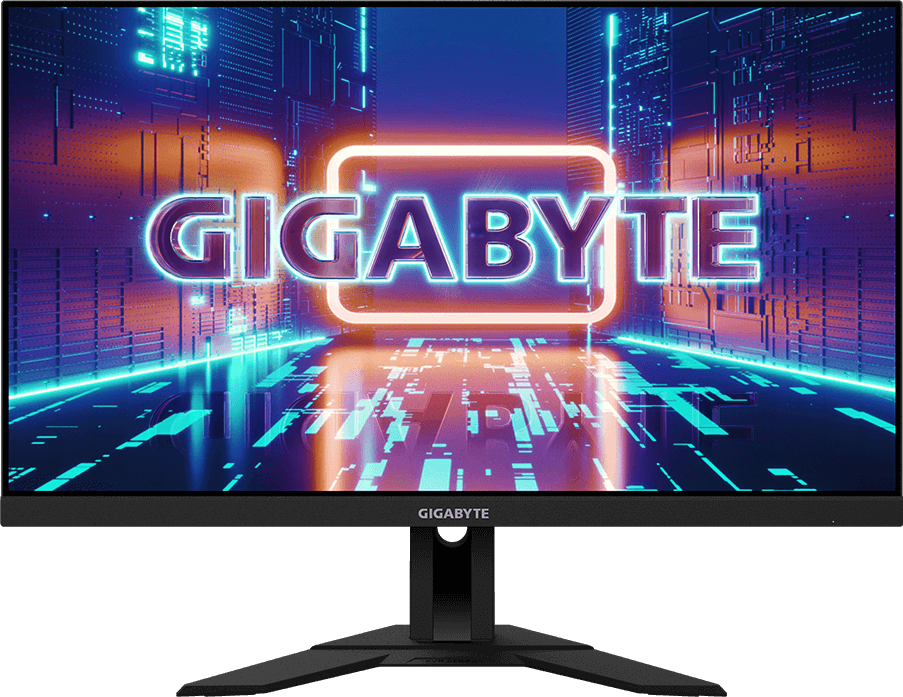
Choose the Gigabyte M28U if the same 4K screen also has to game — 144 Hz on an SS-IPS panel with 1 ms response, DisplayHDR 400 and a USB-C KVM.
Choose the Dell S2725QC if…
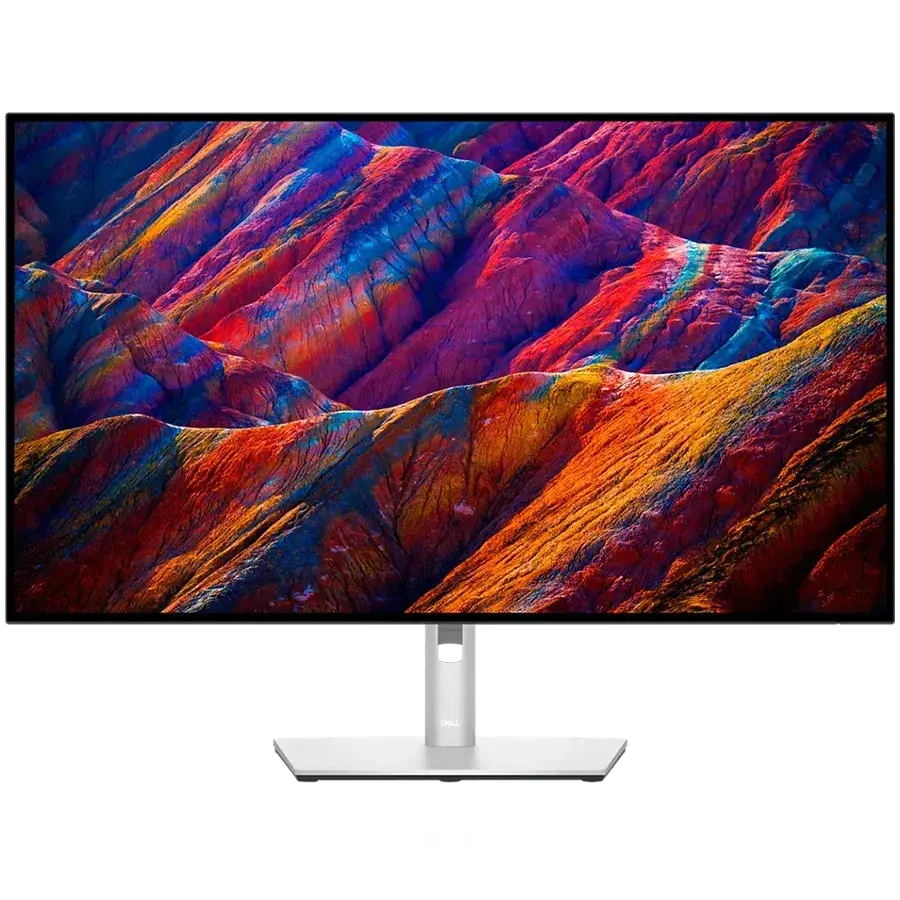
Choose the Dell S2725QC if a laptop is the main source — its USB-C carries 65 W charging, it has 2 × 5 W speakers, and its reference price starts lower.
What you'll actually notice
The differences that change which one you should buy, rather than every difference there is.
Refresh rate
The Gigabyte M28U runs at 144 Hz against 120 Hz. That gap shows up in fast-paced games where the frame rate can actually reach it, and is essentially invisible for desktop work, browsing and video.
KVM switch
Only the Gigabyte M28U has a KVM switch, so one keyboard and mouse can move between two connected machines without unplugging anything. That is a two-computer desk feature; on a single-machine desk it changes nothing.
HDR
The Gigabyte M28U carries the stronger HDR certification (VESA DisplayHDR 400 against HDR10). That shows up in HDR games and film, not in ordinary SDR desktop use.
Speakers
Only the Dell S2725QC has built-in speakers (2 × 5W), which saves a cable on a simple desk and will not replace dedicated audio.
What the price difference means
The Gigabyte M28U sits about $150 more by reference price ($400–$500 against $280–$350 for the Dell S2725QC). That premium is buying specific capabilities rather than a generally better product.
Reference prices are our own editorial figures for a typical street price, not live retailer quotes.
Paying more for the Gigabyte M28U buys
- Refresh rate
- KVM switch
- HDR
What it does not buy
- Speakers — the Dell S2725QC leads here
- a decisive lead in the SetupArc Score (8.5 against 8.4)
Key differences
The specifications that meaningfully differ between the two. A highlighted value is the stronger figure where it can be compared objectively.
| Specification | Gigabyte M28U | Dell S2725QC |
|---|---|---|
| Screen Size | 28" | 27" |
| Panel Type | SS-IPS | IPS |
| Color Coverage | 94% DCI-P3 | 99% sRGB |
| Brightness | 300 nits (400 peak) | — |
| HDR | VESA DisplayHDR 400 | HDR10 |
| Refresh Rate | 144 Hz | 120 Hz |
| Response Time | 1 ms (GtG) | 4 ms (fast) |
| Adaptive Sync | FreeSync Premium Pro / G-Sync Compatible | AMD FreeSync Premium |
Full side-by-side specs
| Specification | Gigabyte M28U | Dell S2725QC |
|---|---|---|
| Screen Size | 28" | 27" |
| Resolution | 3840 × 2160 (4K UHD) | 3840 × 2160 (4K UHD) |
| Refresh Rate | 144 Hz | 120 Hz |
| Panel Type | SS-IPS | IPS |
| Aspect Ratio | 16:9 | 16:9 |
| Response Time | 1 ms (GtG) | 4 ms (fast) |
| Brightness | 300 nits (400 peak) | — |
| HDR | VESA DisplayHDR 400 | HDR10 |
| Color Coverage | 94% DCI-P3 | 99% sRGB |
| USB-C | Yes (DP Alt) | Yes (DP Alt, 65W) |
| Thunderbolt | No | No |
| HDMI | 2 × HDMI 2.1 | 2 × HDMI 2.1 |
| DisplayPort | 1 × DP 1.4 | No |
| Adaptive Sync | FreeSync Premium Pro / G-Sync Compatible | AMD FreeSync Premium |
| KVM Switch | Yes (Type-C) | — |
| VESA Mount | 100 × 100 | 100 × 100 |
| Speakers | No | 2 × 5W |
| Height Adjustable | Yes | Yes |
| USB-C Power Delivery | — | 65 W |
Who should buy each one
Gigabyte M28U
Buyers who want affordable 4K/144Hz for gaming, consoles and creative work with USB-C convenience.
- DisplayHDR 400 (no strong local dimming)
- USB-C power delivery limited
Dell S2725QC
Value-focused buyers who want a crisp 4K screen with single-cable USB-C charging for a laptop.
- No Ethernet, KVM or DisplayPort input
- 65W may not fully power large laptops
Final verdict
There is no single winner here — the right choice depends on what you need.
Better for 4K gaming and consoles.
Read the full Gigabyte M28U reviewBetter for a single-cable laptop desk.
Read the full Dell S2725QC reviewAt 8.5 and 8.4, these scores are too close to decide anything on their own. Use the trade-offs above instead — how we score.
Keep exploring
Want to line these up against other options, or get a tailored recommendation?