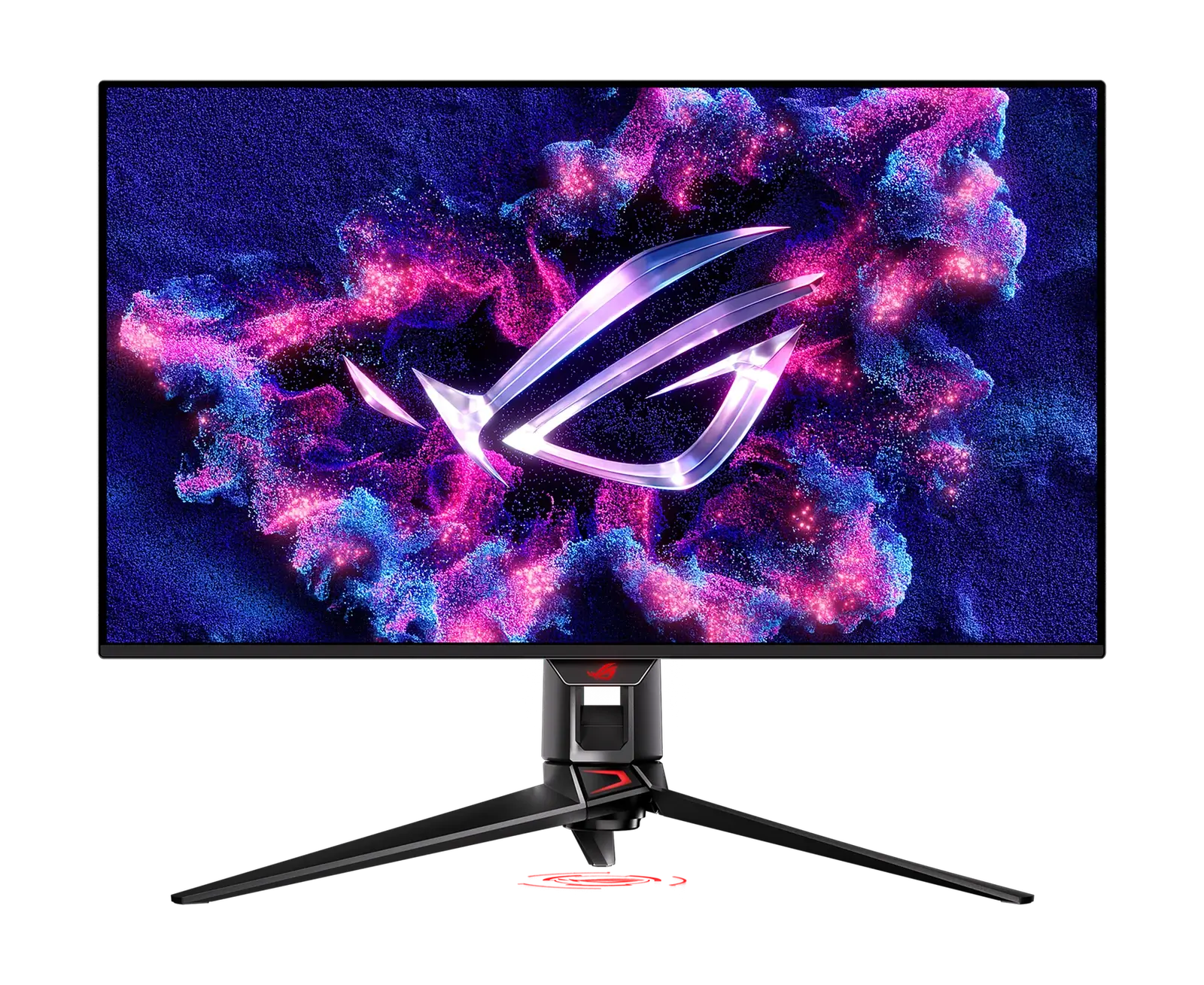
Best Overall
ASUS
SetupArc9.3
ASUS ROG Swift OLED PG32UCDM
A 4K/240Hz QD-OLED that's exceptional for gaming and doubles as a stunning creative display.
- Screen Size32"
- Resolution3840 × 2160 (4K UHD)
- Refresh Rate240 Hz
Reference price
$950–$1,100
5K resolution with Thunderbolt 4 docking, 90 W charging and print-oriented colour management in one display.
5K resolution with Thunderbolt 4 docking, 90 W charging and print-oriented colour management in one display.
The PD2730S is BenQ's 5K entry in its designer line: 5120 × 2880 across 27 inches, about 218 pixels per inch, on a nano-matte IPS panel that scatters reflections rather than mirroring the room. BenQ rates it for 100% sRGB, 100% Rec.709 and 98% DCI-P3 with an average Delta E of 2 or less, ships a factory calibration report and lists Pantone Validated, Pantone SkinTone Validated and Calman Verified certifications alongside its ICCsync and Uniformity features. The differentiator against other 5K panels is the port: a Thunderbolt 4 upstream connection carrying video, data and 90 W of charging, with a second Thunderbolt 4 port for daisy-chaining at 15 W. There is also HDMI 2.1, DisplayPort 1.4, a USB hub and a built-in KVM.
Every product is assessed against the same five criteria, from specifications and use-case fit. How we score
Pick the device you already own. Each answer is drawn from this monitor's recorded specifications, and says so — where we have not confirmed something, we say that instead of guessing.
Works well
A desktop GPU connects over this monitor's DisplayPort 1.4 input, the standard pairing for a modern card and the one with the most bandwidth headroom here.
Specifications are recorded from manufacturer documentation, and values we cannot confirm are left unknown rather than estimated. How we verify specs
Designers and photographers on a Thunderbolt laptop who want 5K sharpness, managed colour and a one-cable desk with daisy-chaining.
Anyone who only needs the resolution — the ASUS 5K costs less — and anyone wanting high refresh or Ethernet.
On price: This is among the more expensive of the 23 monitors we track.
You gain: Typically about $50 less by reference price.
You give up: You give up Thunderbolt and Speakers by going this way.

A different balance for creative work if the budget stretches.
You gain: Adds a stronger Features score.
You give up: Typically about $50 more by reference price.
Price positions use our editorial reference prices, not live retailer quotes. Scores within a few tenths rarely decide a purchase — how we score.
| Specification | BenQ PD2730SThis product | ASUS ROG Swift OLED PG32UCDM | Dell UltraSharp U3225QE |
|---|---|---|---|
| SetupArc Score | 9.1 | 9.3 | 9.3 |
| Price | $1,050–$1,150 | $950–$1,100 | $850–$1,000 |
| Screen Size | 27" | 32" | 31.5" (32" class) |
| Resolution | 5120 × 2880 (5K) | 3840 × 2160 (4K UHD) | 3840 × 2160 (4K UHD) |
| Refresh Rate | 60 Hz | 240 Hz | 120 Hz |
| Panel Type | IPS (Nano Matte) | QD-OLED | IPS Black |
| Aspect Ratio | 16:9 | 16:9 | 16:9 |
| Response Time | 5 ms (GtG) | 0.03 ms (GtG) | 5 ms (GtG, fast) |
| Brightness | 400 nits | — | 600 nits |
Any figure below is the price we recorded on the date shown beside it, not a current price. Retailers set their own prices and availability — check the retailer for what you will actually pay today.
Where the cheaper 5K panels give you the resolution, the PD2730S gives you the resolution and the desk: Thunderbolt 4 means one cable carries the picture, the peripherals and 90 W of power, and the second port daisy-chains. The colour work is serious — Pantone and Calman validation, a calibration report, ICCsync — and the nano-matte finish suits a bright room. It runs at 60 Hz and costs meaningfully more than the ASUS 5K, so the question is whether Thunderbolt and the colour-management toolchain are worth the difference. For a working design desk, usually yes.
A 4K/240Hz QD-OLED that's exceptional for gaming and doubles as a stunning creative display.
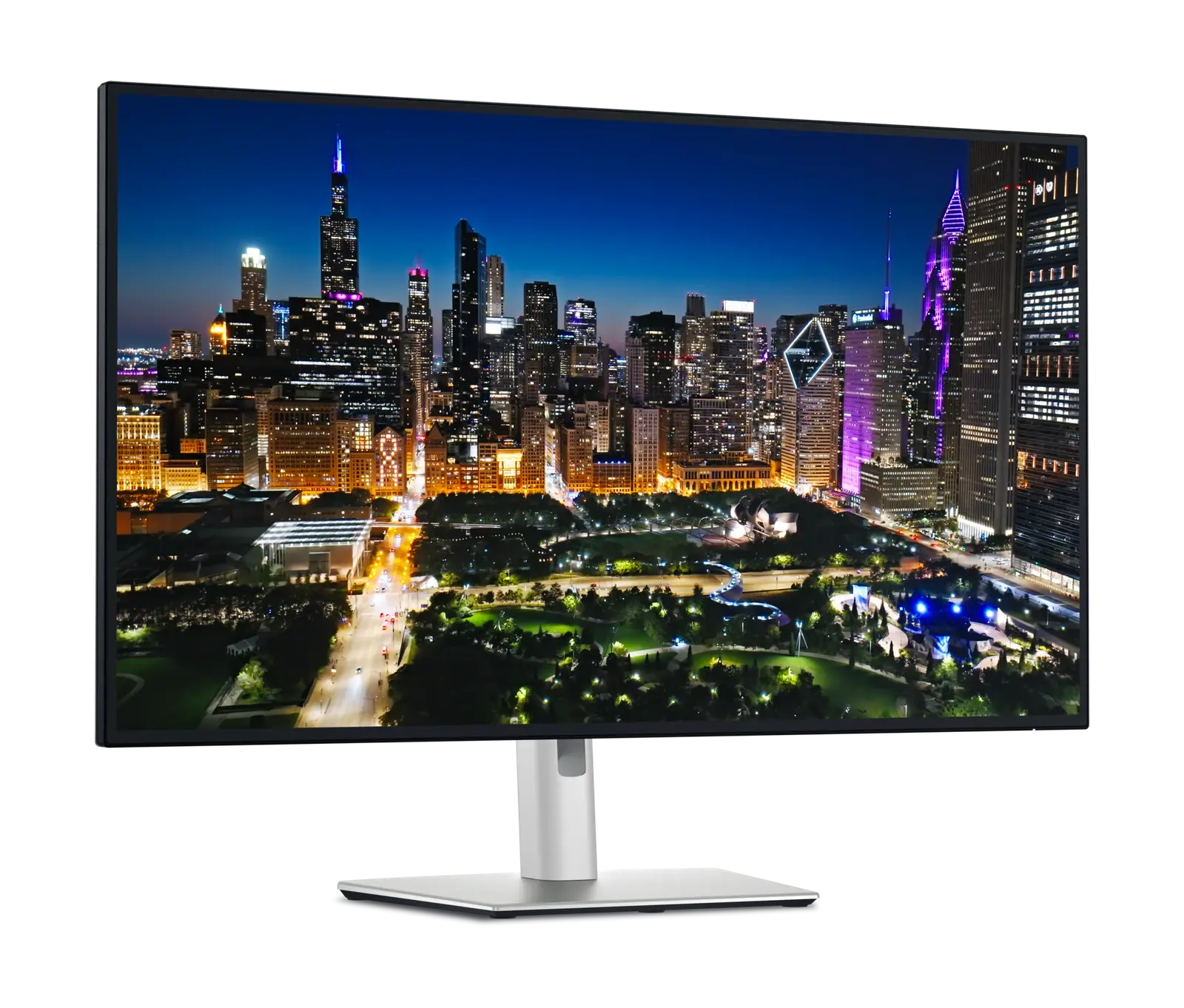
A 32-inch 4K workstation display that replaces a dock, charges a laptop at 140W and switches between two machines.
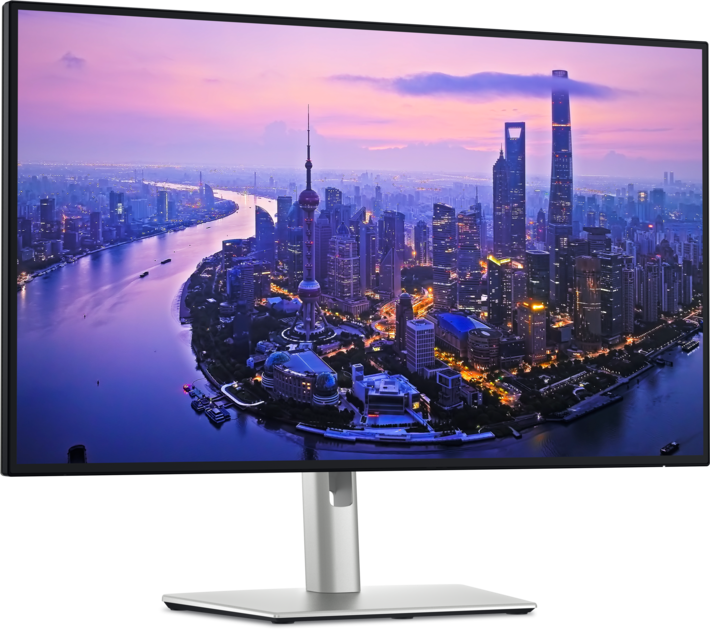
The single-cable productivity monitor to beat: 4K, Thunderbolt 4, 140W charging, KVM and Ethernet in one.
Size, resolution, panel type, refresh rate and ports — the five decisions that actually matter, explained in plain English.
More pixels mean sharper text and more room — but also higher cost and scaling quirks. Here's how to decide for work.
The PS5 asks for three things from a display, and only one of them is the port. Here is which monitors in our catalogue take its full 4K 120Hz output, which fall short and why.