How SetupArc Verifies Product Specifications
Where our numbers come from, what we do when sources disagree, and why some fields on our product pages deliberately say nothing at all.
SetupArc verifies technical specifications against manufacturer documentation and preserves unknown values when a specification cannot be confirmed. How we score · About the editor · Affiliate disclosure
What you'll learn
- Manufacturer documentation is the primary source for every technical figure
- Unconfirmed specifications are stored as unknown, never estimated
- Retailer listings inform availability and price, never core specs
- Affiliate relationships have no input into scores or rankings
Specification tables look authoritative wherever you find them, which is the problem. Retailer listings contradict each other, review sites copy figures from one another, and manufacturers occasionally contradict themselves between a product page and a spec sheet. This page sets out what SetupArc actually does about that, in enough detail to be checkable.
1. Manufacturer documentation comes first
Every technical figure on this site is taken from the manufacturer, in a defined order of preference: the official product page, then the official specification sheet or manual, then official support documentation. Reputable third-party testing is consulted only where manufacturer documentation does not answer a question. Retailer pages are used for availability and price context and never for a core technical specification.
This matters more than it sounds. While researching docking stations we found retailer listings that disagreed with the manufacturer on downstream port count and Ethernet speed for the same model. Kensington's own page states three Thunderbolt 4 ports and 2.5Gb Ethernet for the SD5780T; listings variously claimed four ports and gigabit networking. We recorded the manufacturer's figures and discarded the rest.
2. A shared vocabulary, not free text
Specifications are stored against a fixed set of keys per category rather than as whatever phrasing a manufacturer happened to use. One monitor's "USB-C Power Delivery", another's "USB-C PD" and a third's "USB-C charging" are the same fact, and if they are stored as three different things then nothing can compare them.
Alongside the display text we store a machine-comparable value — a number for a wattage, a count for a port, a boolean for a capability. That is what filters, the comparison tool and the compatibility engine actually read, which is why they cannot be misled by a marketing phrase in the visible text.
3. Unknown is a real answer
This is the policy we are most willing to be judged on. When a manufacturer does not publish a figure, we store nothing for it, and the site says so. We do not infer it from a sibling model, from retailer copy, or from what would be typical for the class of product.
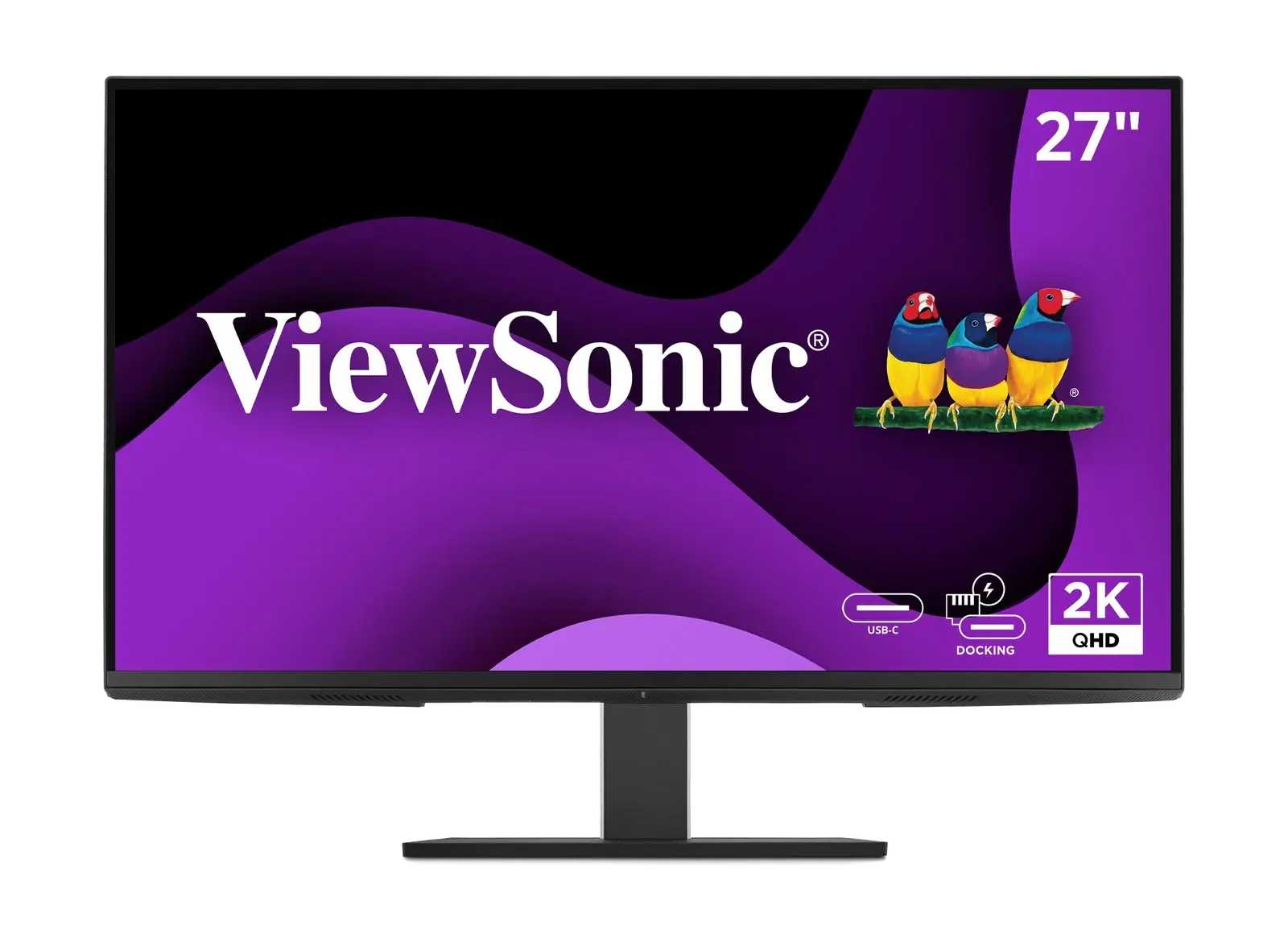
Two examples currently live on the site. ASUS publishes a DC input rating for the ZenScreen MB16ACV but no USB-C power-delivery wattage, so its charging figure is blank and its compatibility card says charging is unconfirmed rather than guessing a number. ViewSonic lists a DisplayPort input on the VG2758-2K without stating its version, so that monitor's desktop-GPU verdict reads "DisplayPort version not recorded" — an explicit gap in our data rather than a claim about the product.
A guess that happens to be right is indistinguishable from a guess that is wrong, and a buyer cannot tell which they are reading. A blank field tells you precisely where to go and check for yourself.
4. When sources disagree
Conflicts are resolved in favour of the manufacturer's own current documentation, and the conflict is recorded rather than quietly dropped. Where a manufacturer contradicts itself — a feature page saying one thing and a specification table omitting it — we record the more conservative reading and note which source said what.
The same discipline applies to products we end up not listing. One docking station was shortlisted on reputation and dropped during research: the Anker 568 was marked no longer available by multiple major retailers and is documented as incompatible with MacBooks, which made it a poor recommendation regardless of how it reviewed when it launched. Availability and current fitness are part of verification, not separate from it.
5. Compatibility is derived, not written
The "Works with" card on each monitor page is not editorial text. It is produced by a rule engine that reads the stored specifications and applies the same rules to every product, so two monitors with identical facts always get identical verdicts. The engine is built on three principles: a missing fact produces "unknown" rather than a verdict, only machine-comparable values drive a rule, and a capability a product does not have is distinguished from one we have not recorded.
Because the verdicts are generated, our guides can quote them directly rather than re-judging products by hand — which is how the PS5 and MacBook guides stay consistent with the product pages they link to. When a specification is corrected, every verdict that depends on it changes with it.
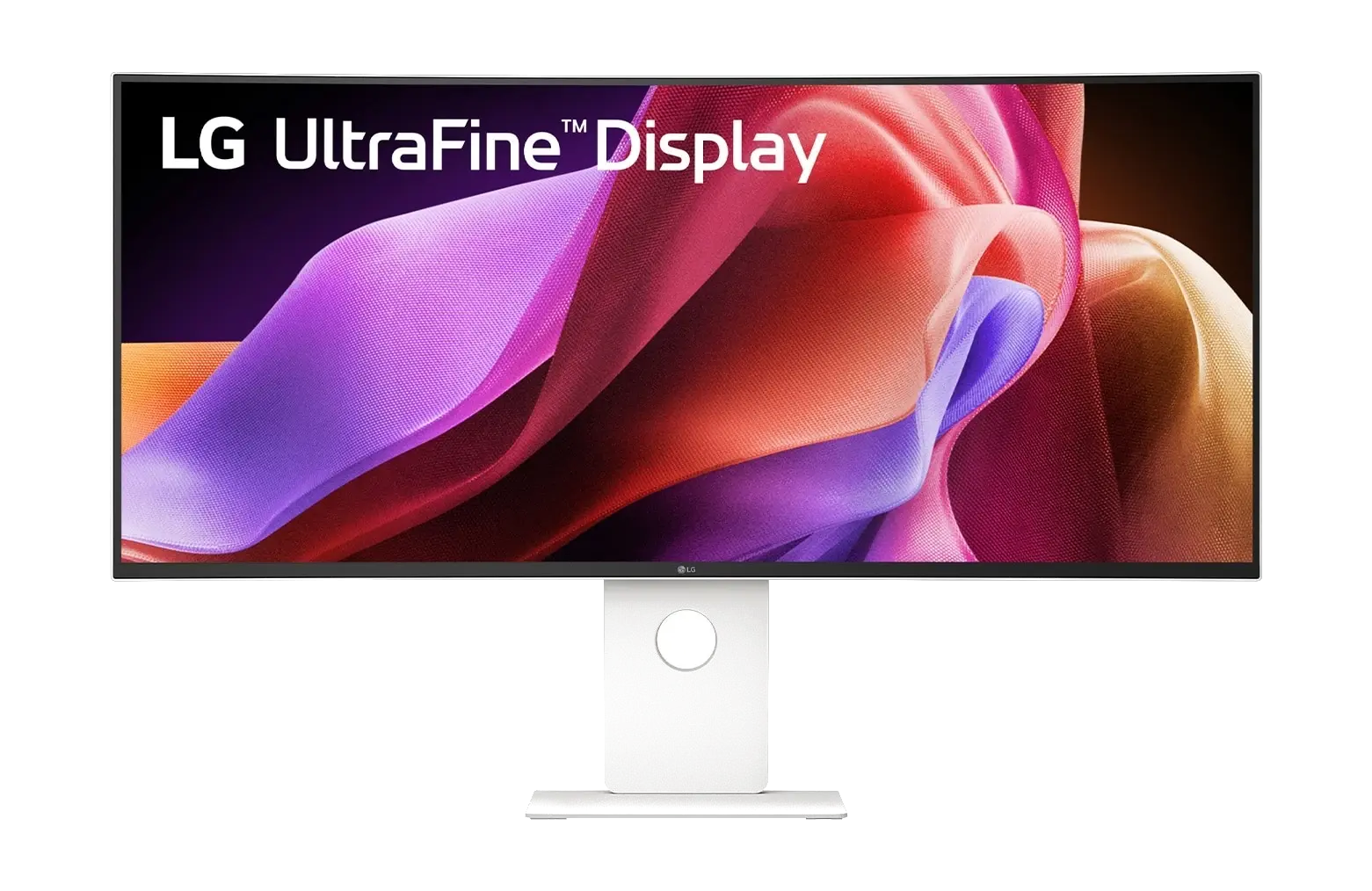
The engine is also extended conservatively. When the LG UltraFine evo 40U990A-W introduced DisplayPort 2.1 to the catalogue — a version nothing we listed had used before — we verified that it evaluated correctly and added tests to keep it that way, rather than treating a newer standard as an unknown quantity.
6. Product images
Primary product images come from manufacturer sources, and we record where each one came from. They are processed only in ways that do not change what the product looks like: removing a uniform background, trimming empty margins, adding consistent padding, resizing and re-encoding. We do not reconstruct missing parts of a product, recolour it, alter its proportions, or generate imagery. Where an official image carries a promotional badge or overlay we prefer a cleaner official alternative, and where none exists we use the best available official asset rather than editing the badge out.
7. What we do not claim
SetupArc does not claim hands-on testing. We do not write "we tested", "we measured" or "in our lab", because we would not be able to stand behind it. Our assessments are built from manufacturer specifications, technical documentation, reputable third-party testing where it exists, and a structured comparison method applied consistently across a category. Our scoring methodology sets out the five criteria and states plainly that the overall score is an editorial judgement rather than a calculation.
We also do not claim that every specification is re-checked continuously. Figures are verified when a product is added or revised. Manufacturers change specifications, discontinue models and quietly revise ports between production runs, so the honest statement is that our data reflects documentation at the time of entry and is corrected when we find it has moved.
8. Corrections
If a figure on this site is wrong, we would like to fix it, and the fastest route is a link to the manufacturer documentation that contradicts us. Corrections are applied to the stored specification, which means any score, filter, comparison or compatibility verdict that depended on it updates at the same time. You can reach us through the contact page.
9. Affiliate independence
SetupArc may earn a commission when you buy through links on this site. That relationship has no input into which products we list, how they score, how they rank, or what a compatibility verdict says. Retailer links are stored as clean URLs, and where a product has no confirmed listing at a retailer we record no offer rather than inventing one to fill a row. The full statement is on our affiliate disclosure page.
Manufacturer documentation first. Unknown when it is unknown. Verdicts generated from stored facts, not written to suit a recommendation. No testing claims we cannot support.