Monitors · Head-to-head
BenQ RD280U vs Dell UltraSharp U2725QE
A 3:2 programmer's monitor against the default 16:9 docking workstation — the same pixel density, but a different shape and a different idea of what a work screen is for.
Quick verdict
Choose the BenQ RD280U if…
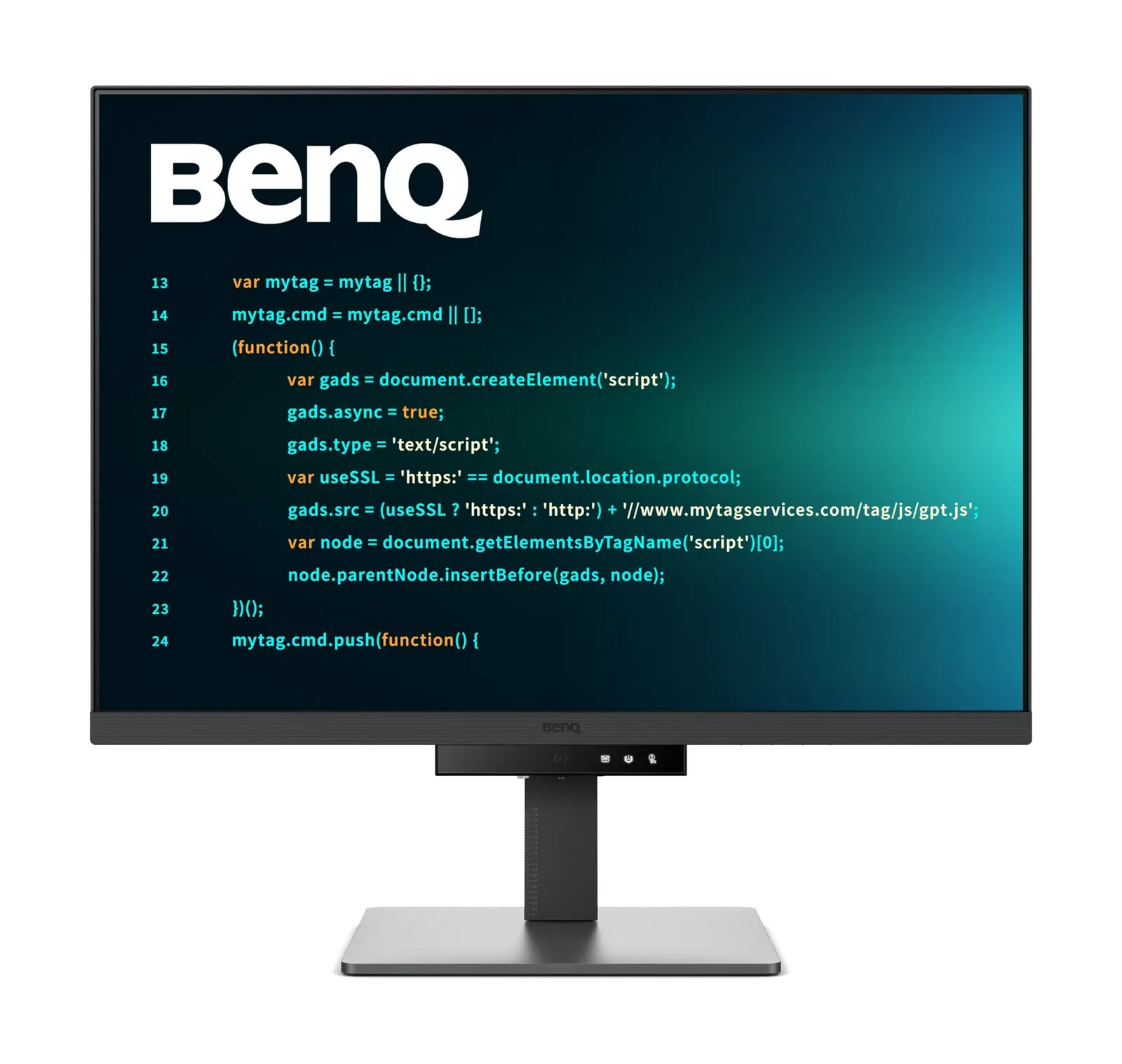
Choose the BenQ RD280U if your day is vertical. Its 3840 × 2560 panel is the same sharpness as the Dell — about 164 pixels per inch against 163 — but gives 400 more rows of pixels, which in practice is more of a file, a document or a terminal visible without scrolling. It charges a laptop at 90 W, includes a KVM, and its nano-matte surface scatters reflections. It runs at 60 Hz and covers 95% DCI-P3, so it is not the screen for motion or print-accurate colour.
Choose the Dell UltraSharp U2725QE if…
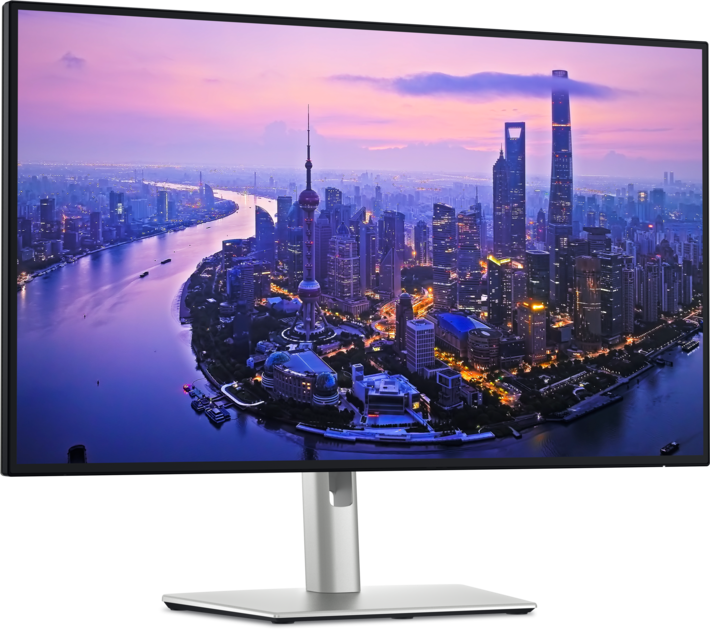
Choose the Dell UltraSharp U2725QE if the monitor also has to be the dock. Thunderbolt 4 with 140 W charging, 2.5 GbE Ethernet and a KVM mean one cable carries everything, and at 120 Hz on an IPS Black panel rated DisplayHDR 600 everyday scrolling and window work are visibly smoother than the BenQ's 60 Hz. You give up the extra vertical space and pay around $100 more at reference price.
What you'll actually notice
The differences that change which one you should buy, rather than every difference there is.
Refresh rate
Decides itThe Dell UltraSharp U2725QE runs at 120 Hz against 60 Hz. That gap shows up in fast-paced games where the frame rate can actually reach it, and is essentially invisible for desktop work, browsing and video.
Thunderbolt
Decides itOnly the Dell UltraSharp U2725QE has Thunderbolt 4, recorded alongside 140 W of charging and 2.5 GbE networking. That is what lets it stand in for a dock rather than only being a display; the BenQ RD280U leaves docking to a separate device.
Screen finish
Decides itBoth are IPS panels, but only the BenQ RD280U records an anti-glare treatment (IPS (nano-matte)). That is a room question rather than a quality one — it matters if you work opposite a window or under bright lights.
USB-C power
The Dell UltraSharp U2725QE is rated for 140 W over USB-C against 90 W. More headroom matters for laptops that draw heavily under sustained load; below that, both simply keep a machine topped up.
What the price difference means
These sit in overlapping reference-price bands ($549–$650 against $640–$870), so price is unlikely to decide this one — choose on the differences above.
Reference prices are our own editorial figures for a typical street price, not live retailer quotes.
Key differences
The specifications that meaningfully differ between the two. A highlighted value is the stronger figure where it can be compared objectively.
| Specification | BenQ RD280U | Dell UltraSharp U2725QE |
|---|---|---|
| Screen Size | 28.2" | 27" |
| Resolution | 3840 × 2560 (4K+) | 3840 × 2160 (4K UHD) |
| Panel Type | IPS (nano-matte) | IPS Black |
| Aspect Ratio | 3:2 | 16:9 |
| Color Coverage | 95% DCI-P3 | 99% DCI-P3 |
| Brightness | 350 nits (typical), 400 nits peak HDR | 450 nits (DisplayHDR 600) |
| HDR | HDR10, VESA DisplayHDR 400 | VESA DisplayHDR 600 |
| Refresh Rate | 60 Hz | 120 Hz |
Full side-by-side specs
Both columns are the manufacturer specifications recorded in our catalogue. Where a figure is not published we leave it blank rather than estimating it — how we verify specifications.
| Specification | BenQ RD280U | Dell UltraSharp U2725QE |
|---|---|---|
| Screen Size | 28.2" | 27" |
| Resolution | 3840 × 2560 (4K+) | 3840 × 2160 (4K UHD) |
| Refresh Rate | 60 Hz | 120 Hz |
| Panel Type | IPS (nano-matte) | IPS Black |
| Aspect Ratio | 3:2 | 16:9 |
| Response Time | 5 ms (GtG) | 5 ms (GtG) |
| Brightness | 350 nits (typical), 400 nits peak HDR | 450 nits (DisplayHDR 600) |
| HDR | HDR10, VESA DisplayHDR 400 | VESA DisplayHDR 600 |
| Color Coverage | 95% DCI-P3 | 99% DCI-P3 |
| USB-C | Yes (DP Alt, 90W) | Yes (Thunderbolt 4) |
| USB-C Power Delivery | 90 W | 140 W |
| Thunderbolt | No | Thunderbolt 4 |
| HDMI | 1 × HDMI 2.0 | 1 × HDMI 2.1 |
| DisplayPort | 1 × DP 1.4 | 1 × DP 1.4 in + 1 × DP 1.4 out (MST) |
| VESA Mount | 100 × 100 mm | 100 × 100 |
| KVM Switch | Yes | Yes |
| Speakers | 2 × 2 W | No |
| Height Adjustable | Yes (110 mm, tilt/swivel, no pivot) | Yes |
| USB-C Video (DP Alt Mode) | Yes | Yes |
| HDMI Version | 2.0 | 2.1 |
| DisplayPort Version | 1.4 | 1.4 |
| Ethernet | — | 2.5 GbE |
Who should buy each one
BenQ RD280U
Developers and writers who want maximum vertical lines, and anyone sensitive to glare who works long hours in a text editor.
- 60Hz only — not a dual-purpose gaming display
- 3:2 letterboxes 16:9 video
Dell UltraSharp U2725QE
Laptop-first professionals who want a tidy single-cable desk with Ethernet, KVM and high-wattage charging.
- Premium price for a 60/120Hz productivity panel
- No built-in speakers
Final verdict
Aspect ratio is the decision, and it is more practical than it sounds: at the same density, the 3:2 BenQ shows roughly 400 extra rows of whatever you are reading, while the 16:9 Dell shows fewer rows and moves them twice as fast.
More of your work on screen at once, at the cost of refresh rate and docking depth.
Read the full BenQ RD280U reviewThe more complete desk anchor, on the shape most software is designed around.
Read the full Dell UltraSharp U2725QE reviewThe Dell UltraSharp U2725QE scores higher overall (8.7 against 9.2), but that is an editorial judgement across five criteria rather than a formula, and it does not override the trade-offs above — how we score.
Keep exploring
Want to line these up against other options, or get a tailored recommendation?